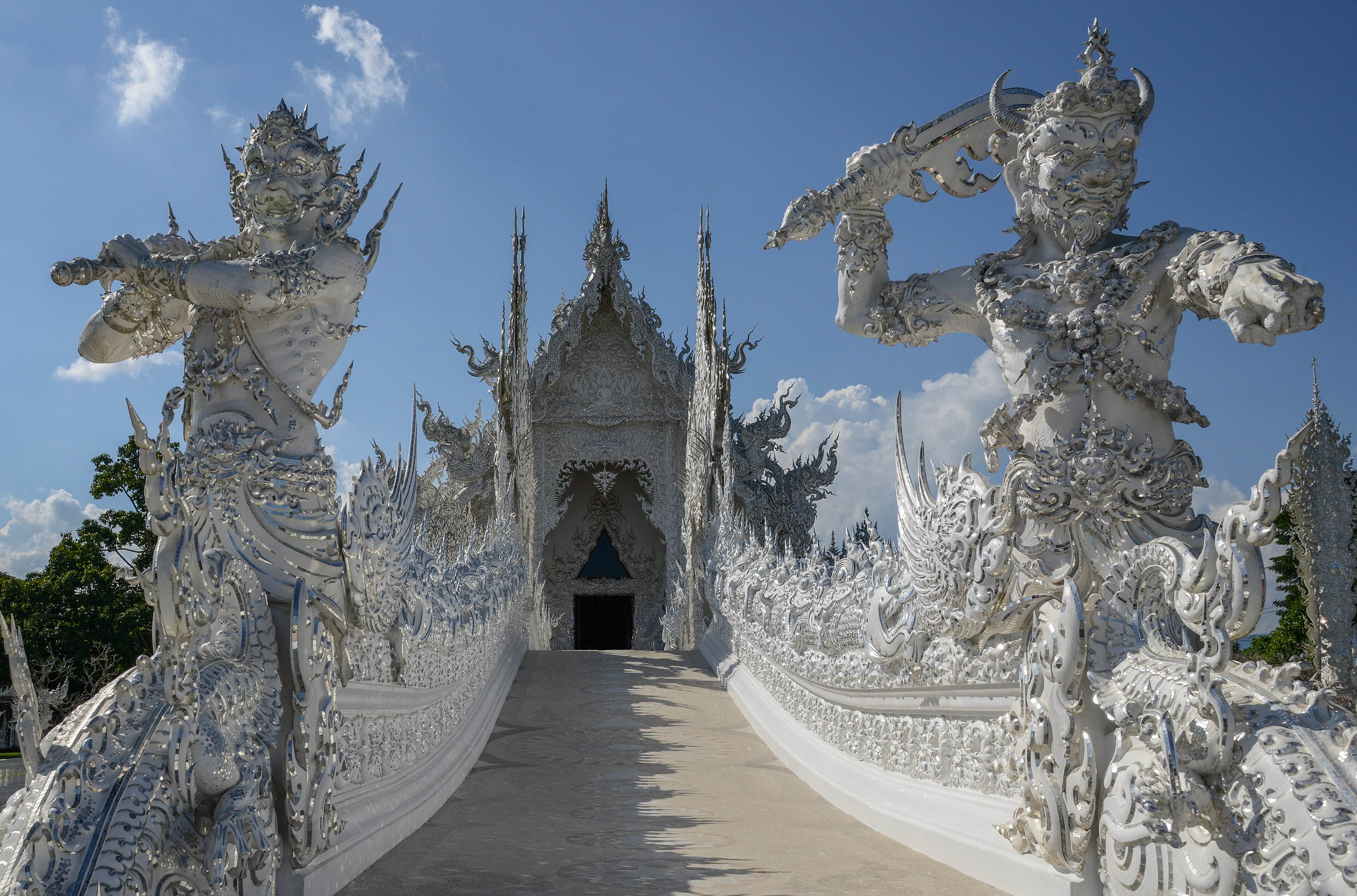

First, the idea
Chalermchai Kositpipat built Wat Rong Khun as a Buddhist temple and a work of art at the same time. The white stands for the purity of the Buddha. The fragments of mirrored glass set into the surfaces are meant to catch the light, a symbol of the Buddha's wisdom shining out. The route takes you from worldly suffering towards enlightenment, and the imagery along the way is dramatic, sometimes dark, and often surprisingly modern.
The artist has said the complex will eventually hold nine buildings, and he does not expect it to be finished in his lifetime. So scaffolding and closed areas are normal.
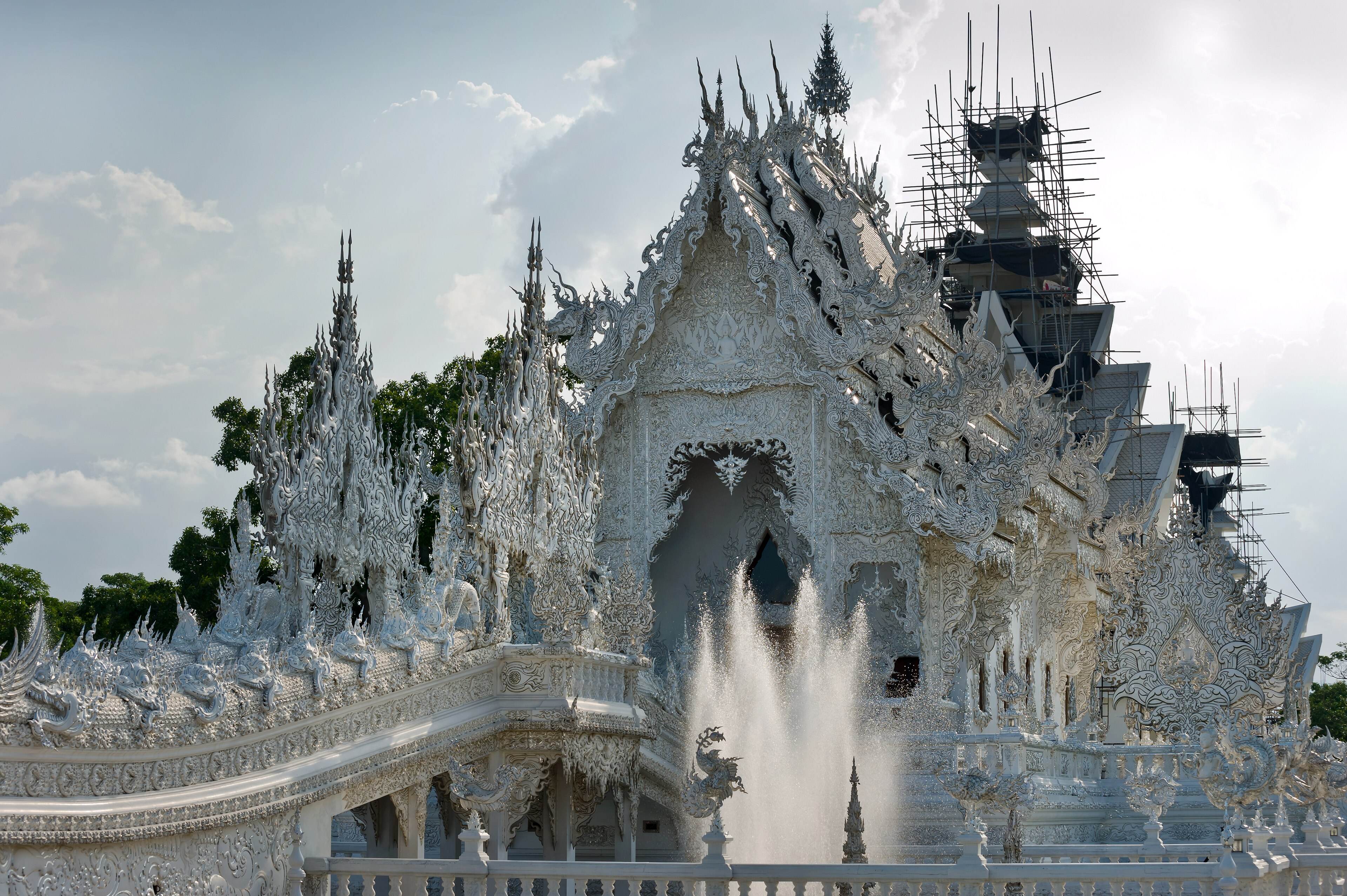

1. The reaching hands
Before the bridge, hundreds of sculpted hands reach up out of the ground on either side of the path. They represent desire and the suffering it causes, the realm you leave behind. Some visitors find it unsettling, which is the point.
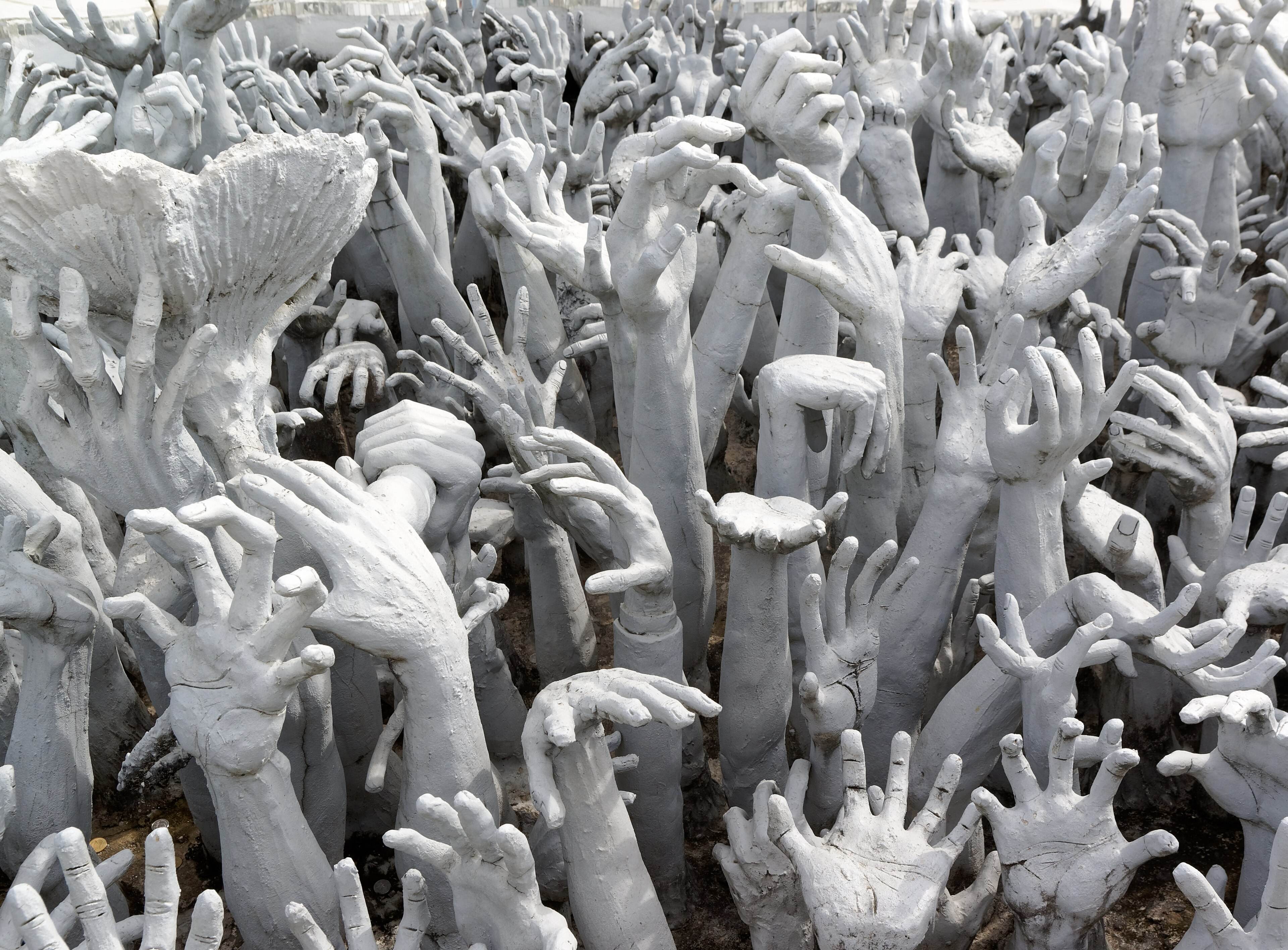

2. The bridge and the gate of heaven
Crossing the bridge stands for the cycle of rebirth, leaving desire behind on the way towards the main hall. The route is meant to be walked one way, towards the hall rather than back, and staff keep people moving at busy times. At the far end, two large guardian figures flank the steps up to the gate of heaven.
3. The ubosot (main hall)
The shining white building at the heart of the complex. Outside it's all white and mirrored glass. Inside, the mood changes completely: the walls are painted with swirling flames and demon faces, and scattered through them are figures from modern life, including superheroes, film characters, and images of war and environmental destruction. The message is about the temptations and dangers of the modern world, set against the calm Buddha image at the front.
You can't take photos inside, and you'll need to take your shoes off, so spend a few minutes looking properly. It's the part of the temple most visitors remember.
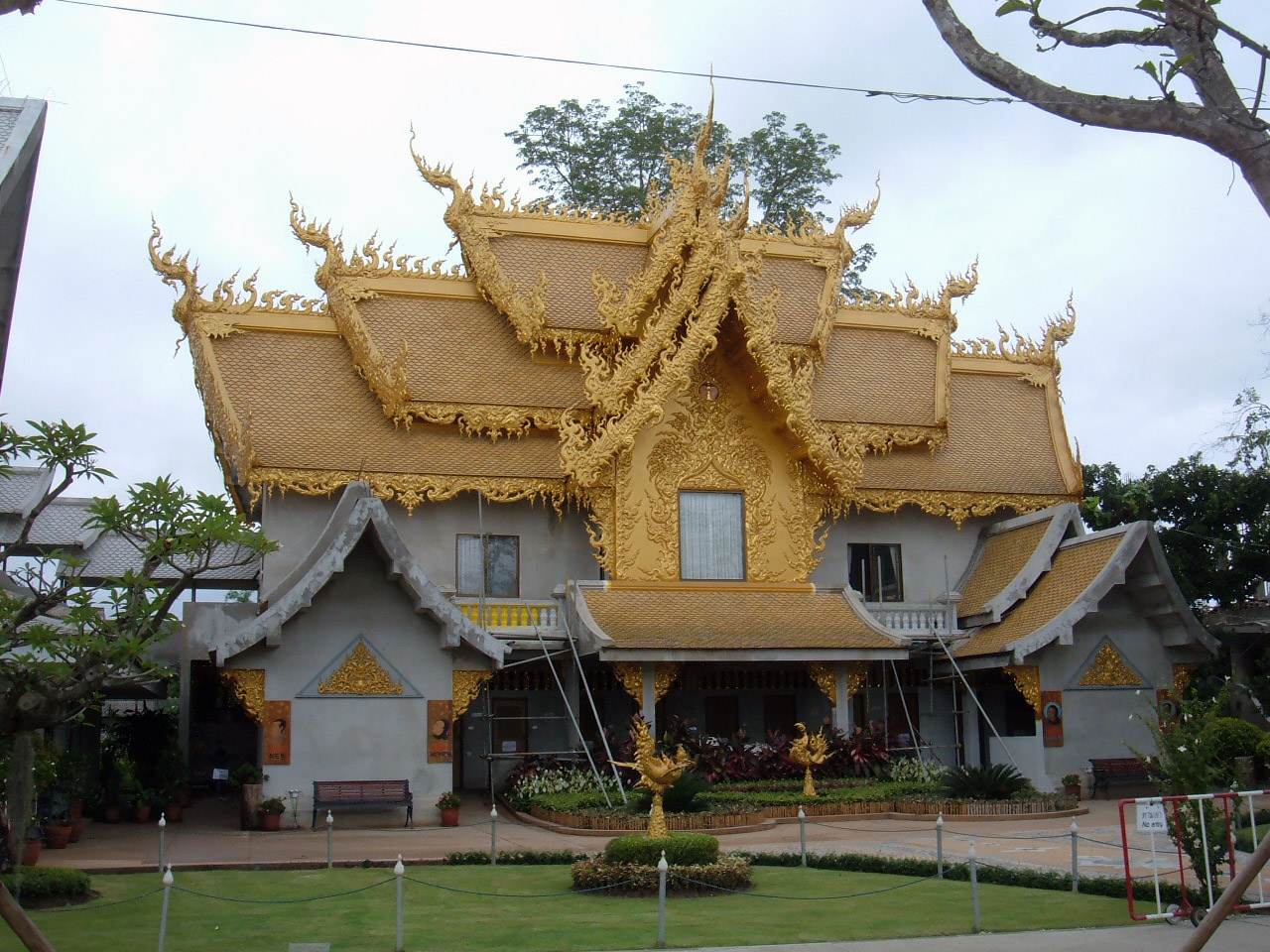
4. The golden building
The ornate gold building near the main hall is often called the most beautiful restroom in Thailand, and yes, it really houses the toilets. The gold is a deliberate contrast. Where white stands for the mind and purity, gold stands for the body and worldly desire, such as money.

5. The Cave of Art
The newest part of the site: a walk-through cave filled with plaster sculptures and changing light. It leads you from a "realm of suffering" towards a "realm of bliss", a smaller, enclosed version of the same journey the whole temple maps out. Since January 2026, entry is included in the foreign-visitor ticket.
6. The gallery and grounds
Leave time for the grounds: the white spires, the ponds and smaller shrines, and the metal ornaments hung up by visitors. The site also has a gallery of the artist's paintings. It's a good place to cool down and a reminder that Chalermchai is a painter first.
Common questions
Why are there superheroes in a Buddhist temple?
The artist uses modern characters to show that the temptations and distractions Buddhism warns about are part of everyday life today, not just ancient stories.
Who is Chalermchai Kositpipat?
A Thai painter and visual artist from Chiang Rai province. He designed Wat Rong Khun, has funded much of it himself, and began rebuilding it in 1997.
What is the best order to see things?
Follow the one-way route from the hands, over the bridge and into the ubosot, then explore the golden building, the grounds, the Cave of Art and the gallery at your own pace.